
Optimizing Bioprocess Design and Workflow Orchestration

Addressing the bottlenecks and enhancing efficiency in R&D
Summary
This article details some of the challenges commonly experienced by process scientists in bioprocess labs, such as experimental design, task assignment and tracking, regulatory compliance, as well as data storage, analysis, and visualization.
In general, bioprocess development tends to be slow, expensive, and complicated due to systemic coordination challenges across discovery, development, and manufacturing. Fragmented laboratory systems create visibility gaps, sample tracking becomes manual as materials move between teams, and tech transfer requires extensive documentation when transitioning from development to production scale. Scientists spend significant time coordinating between groups rather than optimizing processes, and managers often cannot identify bottlenecks until projects are already delayed. Nevertheless, speed to market is vital, and techniques to resolve these workflow coordination gaps and reduce operational inefficiencies are highly desirable.
This white paper outlines some of the key pain points for process scientists in bioprocess development and outlines how labs can utilize workflow management software that supports automated, multivariate, AI-driven approaches to save both time and resources. This article details some of the challenges commonly experienced by process scientists in bioprocess labs, such as experimental design, task assignment and tracking, regulatory compliance, as well as data storage, analysis, and visualization.
Challenges in Bioprocess Development
Inefficient experimental design
The traditional “one-factor-at-a-time” (OFAT) testing approach, where one parameter is changed while others are held constant, makes perfect sense in the classroom. Yet in the real world of complex bioprocesses, this approach is both inefficient and limited, leading to fragile experimental methods that can be difficult to transfer to biomanufacturing.1 Design of Experiments (DOE) offers a systematic alternative by testing multiple parameters simultaneously, but executing and tracking these complex experimental designs across teams requires workflow orchestration not only manage the coordination but also facilitate DOE execution through automation.
Alberto Pascual, an informatics product portfolio leader at Revvity Signals, uses coffee as an analogy: “To achieve the best cup of coffee, you need to consider parameters like temperature, pressure, and coffee beans. Using an OFAT approach, you’d need to make perhaps 1,000 cups of coffee to try all possible combinations of those parameters, which just isn’t feasible.”
In bioprocessing, while the parameters differ from those used to make a cup of coffee, the core issue of exponential complexity remains the same. In addition, since biological processes are multidimensional, changing one parameter often changes something else. Neha Mishra, a senior bioproduction scientist at Revvity Discovery, explains “In cell-line development, the process from vector construct design to an isolated clone can take 12–17 weeks; it’s quite a long process. There are a lot of different parameters to consider.”
Data access
To make full use of the data from each precious experiment performed in the lab, notes and data need to be carefully recorded in retrievable way. The FAIR principles, defined in 2016, promote the Findability, Accessibility, Interoperability, and Reusability of data in research. 2
In the labs of the past, paper lab books were used to record experimental data, which meant having to search through pages and pages of records to locate the data you need. Mishra’s team switched to using electronic lab notebooks (ELNs), which made data location easier, but it still requires an understanding of which ELN contains the experimental data you’re looking for, since ELNs are very experiment centric. “It would be very helpful to have an automated process that collates data for a particular experiment, so that it’s easy to access,” stresses Mishra.
Locating information from previous experiments is a huge problem in today’s labs, since the volume of data generated can be so vast. For example, it has been estimated that 85% of health research data is wasted or underutilized.3 When data can’t be easily found, the simplest path is often to repeat the experiment, absorbing time, money, and resources unnecessarily.
Data analysis
Beyond experimental design, data analysis remains one of the major bottlenecks in cell-line development. “We need to analyze cell titers and product quality of a lot of different clones at the same time.” explains Mishra, “That means we have massive quantities of data to analyze so that we can pick the right clone, and that's time-consuming.”
Similarly, considerable effort is spent transferring data from one system to another, such as from one instrument to a USB stick to another instrument. “On average, daily, we could easily spend maybe an hour or two doing just that,” stresses Mishra, “We have different cell counters and different instruments for measuring product quality or titer, and everything has an individual setup; none of the instruments talk to each other.”
Apart from the time cost, there is also the risk of introducing errors when transferring data between instruments and analysis spreadsheets: “Sometimes it takes time to realize that an error was introduced, and you have to go back and dig for the data again. This is why we store all our data for at least six months.”
Data visualization
In common with most bioprocess research, cell-line development produces significant data volumes. Process scientists compare graphs created by multiple instruments and software applications to assess the progress and results of each experiment. “Another time saver,” adds Mishra, “would be to have a way of getting a visual overview of what an experiment is actually telling you.”
Regulatory compliance
To reduce unwanted variability, bioprocess experiments follow standard operating procedures (SOPs), with a series of predefined steps to ensure that all researchers are performing the experiments in the same way. Mishra explains that in cell-line development, multiple separate SOPs apply, such as one for transfection, one for titer analysis, etc. This means that onboarding new staff takes time, as there is a need to ensure they understand which SOPs to follow, and in which order.
In addition, with many different reagents, consumables and samples, traceability and sample ID tracking are crucial. Keeping track of all this information is time consuming, and Mishra estimates that she spends one to two hours per week checking that critical audit data have been properly recorded. To complicate things further, different lab instruments may have their own unique sample ID systems, and manually mapping these from system to system without risking data integrity presents a significant challenge.
Task assignment and tracking
In small organizations, one team might perform all aspects of the R&D and product quality analysis. However, in larger biopharmaceutical companies, the workflow is more compartmentalized, and teams need to know when to expect a task to arrive on their desk. Asking people or sending emails to assign and track tasks can cause issues that result in wasted resources. “One person could have had assigned somebody a task,” explains Mishra, “But then I come in and I had no idea that the task has been assigned, and I start doing it myself. Sometimes this might mean that we are doing double the work.” On the other end of the scale, miscommunication can lead to deadlines being missed. Mishra emphasizes that: “Even if a spreadsheet is used to keep a record of what each individual in the team is doing, this only works if everyone checks and updates it on a daily basis, which is time consuming.”
Addressing Pain Points by Reducing R&D Workflow Friction
Today’s labs are complex; many teams need to work together, and each has its own tools and workflows even as they share the common purpose. Mishra emphasizes, “We all have deadlines. We need to finish projects on time and report results back to the client, so there is a sense of urgency in the lab. But costs are also crucial because we need to work within a quotation.”
With cutting-edge workflow management solutions, R&D will soon look quite different:
- Data for a particular experiment will be easily retrieved, and data for each individual sample across different pieces of equipment will be consolidated
- Management software will highlight whether instruments need calibrating and whether there is sufficient inventory for a particular experiment
- Tasks will be automatically assigned to appropriate members of staff, and findings will be collated and reported
- SOPs will be digitized and changes properly documented, to ensure a robust audit trail
- Documentation will be integrated, so that users know the workflow they need to follow for their experiment, including the most up-to-date SOPs to use at each step.
- Processes, procedures, and data from different R&D teams/departments will be siloed together, making them readily available when handing products to biomanufacturing teams and ensuring that nothing is lost in translation
- Sample IDs will be mapped automatically, guaranteeing data integrity across multiple equipment systems
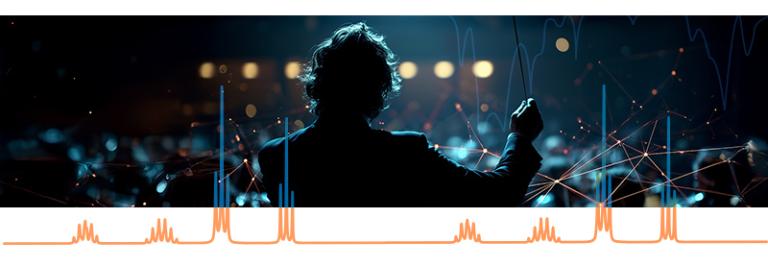
Signals LabGistics™, an AI-first workflow management solution from Revvity Signals, is designed to optimize pharmaceutical development processes such as bioprocess development using AI-powered workflow generation and real-time monitoring to streamline and orchestrate complex scientific workflows. Addressing many of the pain points described above, Revvity Signals’ solution is designed to strategically manage how information flows from one place to another in the lab. Essentially, it provides logistics for your lab, in the same way that the construction industry or automobile manufacturing uses logistics to increase efficiency and customer satisfaction, and to reduce costs.
- Signals LabGistics is a workflow management solution designed to orchestrate complex scientific workflows such as bioprocess development.
- Developed in collaboration with a consortium of researchers across several industries Signals LabGistics aims to make it easier to manage complexity
- By creating a structured environment that supports design, planning, execution, and monitoring of workflows across diverse scientific fields, Signals LabGistics aims to:
- Generate automated workflows using AI-based natural language processing that convert SOPs and natural language descriptions into processes, workflows, and tasks while adhering to a human-in-the-loop philosophy
- Bridge workflow coordination gaps by eliminating email handoffs and manual transfers between teams
- Streamline task management and monitoring with tools that assign responsibilities, track progress and ensure accountability at every stage
- Accelerate technology transfer through seamless handoffs between development and manufacturing processes
- Ensure workflow consistency from early research through production scale-up, minimizing disruptions and inefficiencies.
- Simplify regulatory compliance by supporting documentation and traceability in GxP and quality-controlled environments
Signals LabGistics is currently in its concluding development phase. Initially focusing on experiment orchestration and bioprocessing, Signals LabGistics will progress to supporting biomanufacturing.
For more information about Signals LabGistics, read the brochure available at https://revvitysignals.com/signals-labgistics
References
- Bradley C. Using Design of Experiments (DoE) in Method Development. October 2025. Available at: https://www.labmanager.com/using-design-of-experiments-doe-in-method-development-34251. Last accessed April 2026
- GO FAIR. FAIR Principles. Available at: https://www.go-fair.org/fair-principles/. Last accessed April 2026
- Chalmers I, Glasziou P. Avoidable waste in the production and reporting of research evidence. Lancet 2009;374(9683):86–89
End-to-end workflow support across scientific disciplines.

Intuitive data capture and collaboration with self-service integration.
Turning drawings and ideas into knowledge.

End-to-end workflow support across scientific disciplines.

The Standard for Chemical Drawing.

End-to-end Clinical Data Science Platform.