Search

Your Notifications (0)

There are currently no notifications. You're all set!

Name™

Generate IUPAC Names from Chemical Structures

Fast, accurate chemical nomenclature for even the most challenging molecular structures.
 

Generate IUPAC Names from Chemical Structures

Explore

Get Systematic Chemical Names for Structures, and Produce Structures from Names

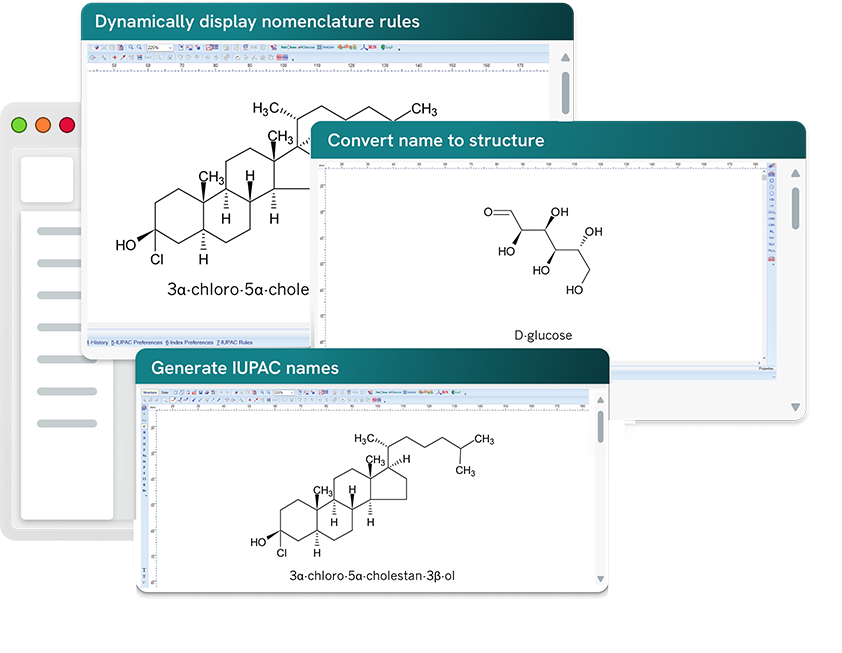
Name generates chemical names according to IUPAC rules, converts chemical names to structures, and easily handles challenging areas of nomenclature.

Generate IUPAC names for organic, biochemical, and some inorganic, organometallic, and polymer structures

Convert systematic or trivial names to structures

Dynamically display the nomenclature rules used to name your structure
Insights on Chemical Nomenclature

Blog

The History of Chemical Nomenclature and Name

Discover the evolution of chemical nomenclature and how Name has set the standard for precision in naming chemical compounds. With over 30 years of continuous development, Name integrates IUPAC rules, CAS standards, and advanced algorithms to deliver accurate, up-to-date names for complex structures.

Benefits

IUPAC Naming at Your Fingertips

Comprehensive Coverage

  • Generate names and structures for a broad array of molecules.
  • Produce structures from InChI, SMILES, and CAS Registry identifiers.
  • Import/export from a wide variety of file formats.

Chemically Intelligent

  • Generate names for organic, biochemical, inorganic, and organometallic structures.
  • Identify tautomers and stereocenters automatically.
  • Produce structures from systematic, semisystematic, and trivial chemical names.

Accurate and Up-to-Date IUPAC Implementation

  • Naming is updated regularly to support new recommendations.
  • Highlight each fragment of your structure to view the applicable IUPAC rule.
  • Naming supported in 22 languages.

How it Works

Name Molecules with 
Ease and Accuracy


  1. Draw or import a structure
  2. Generate the IUPAC name
  3. Examine the generated name and references to the IUPAC rule from which the structure was derived

Features of Name

    • Draw, copy/paste, or import molecular structures in various formats (including ChemDraw, MOL files, and SMILES)
      See the full list of supported data formats
    • Generate accurate systematic names according to IUPAC recommendations
    • Produce Index names in accordance with CAS nomenclature rules*
    • Generate names for organic, biochemical, inorganic, and organometallic structures, including:
      • Various functional groups, including acids, alcohols, aldehydes, ketones, ethers, peroxides, salts, and more
      • Mono- and polycyclic systems
      • Homogeneous and heterogeneous chains
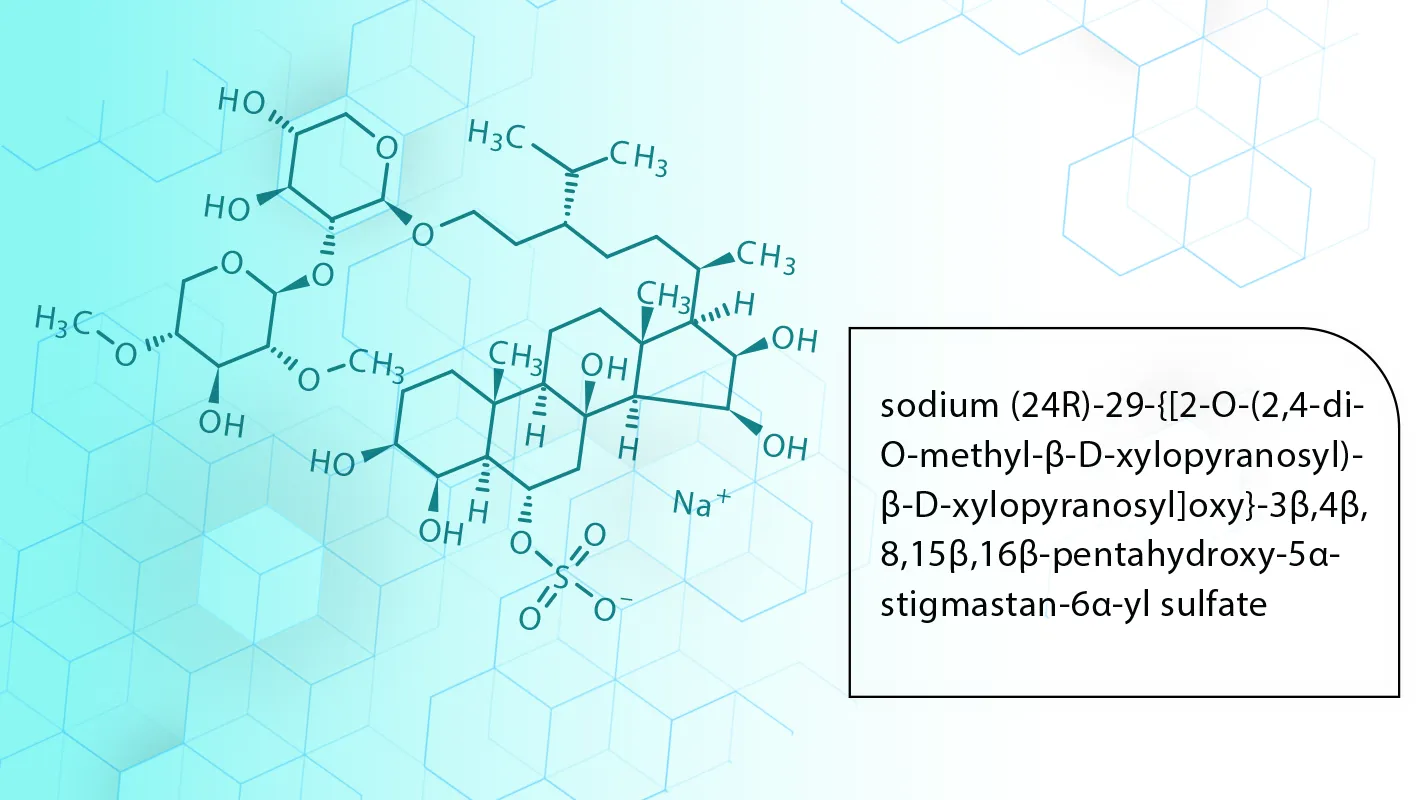
      • Natural product structures (steroids, alkaloids, terpenes, and carotenes)
      • Carbohydrates (in Haworth and other representations)
      • Amino acids, peptides, and derivatives
      • Radicals and charged structures
      • Some polymers
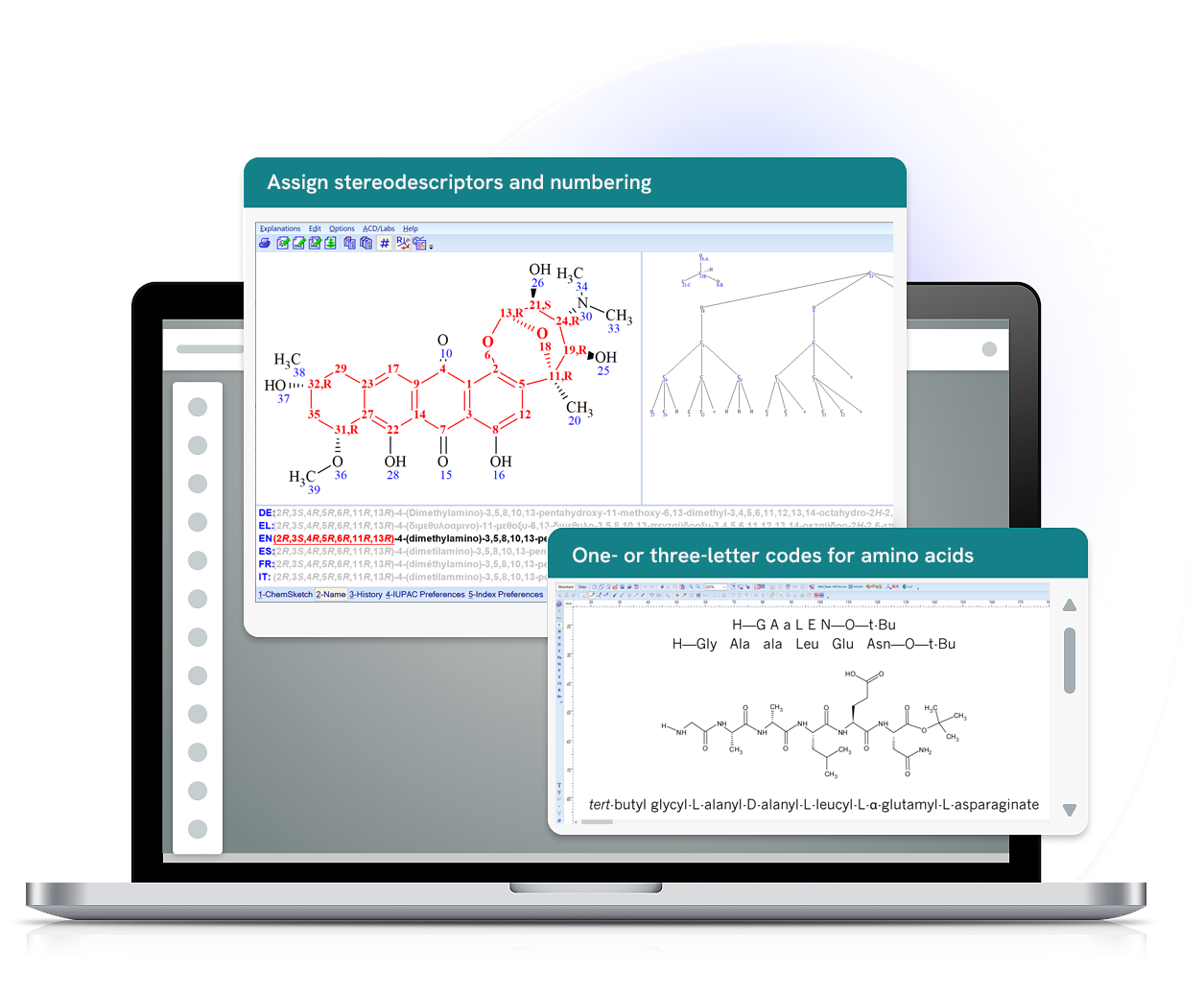
    • Assign stereodescriptors (R/S, E/Z, M/P, r/s, seqCis/seqTrans, α/β, and cis/trans)
    • Assign numbering to atoms
    • Display a “hierarchical graph” for each stereocenter
    • Dynamically display the nomenclature rules used to name your structure
    • Import multiple structures from SD files and automatically generate their names
    • Export structures and names as SD files

    * Index naming algorithms have been developed by ACD/Labs alone and CAS makes no warranty or guarantee about its effectiveness or accuracy. If you require chemical substance names for reporting to regulatory agencies, they should be manually checked or obtained directly from CAS.

    • Generate accurate structures from chemical names, including:
      • Systematic, semisystematic and trivial names of organic compounds
      • Natural product structures and derivatives
      • Amino acids and peptides; including three-letter codes for peptides
      • Complex molecules such as carbohydrates and polysaccharides
      • Functional groups, including acids and derivatives, aldehydes, ketones, alcohols, ethers, and more
      • Incorrect names that do not strictly follow Organic Nomenclature rules
    • Generate structure from many names and identifiers, including:
      • InChI and SMILES notations
      • CAS Registry and EU numbers
      • Trade and registered names (INN, USAN, BAN, JAN)
    • Designate the stereoconfiguration of chiral centers and double bonds
    • Generate structure derivatives using trivial and semi-trivial names from Dictionary
    • Ambiguous names produce a warning, or generate several possible structures for review
    • Generate systematic names in English, French and German
    • IUPAC naming is supported in 19 additional languages—Bulgarian, Croatian, Danish, Dutch, Estonian, Finnish, Greek, Hungarian, Italian, Japanese, Latvian, Lithuanian, Polish, Portuguese, Romanian, Russian, Slovenian, Spanish, and Swedish**
      • Differences in spelling, grammar, and order of citation for substituents are taken into account for these language variations
    • Set your nomenclature and language preferences

    ** The development of naming in specific languages is ongoing and, in some instances, the generated name may deviate from local language recommendations. We recommend consulting nomenclature recommendations for your language to ensure accuracy.

    Nomenclature Products Comparison

    For scientists that don’t need the advanced functionality of Name, we offer Name Chemist Version.

    Revvity Signals
    Other vendors
    Revvity Signals IUPAC naming
    Other vendors IUPAC naming
    Revvity Signals CAS, IUBMB naming
    Other vendors CAS, IUBMB naming
    Revvity Signals Language support for English, French and German
    Other vendors Language support for English, French and German
    Revvity Signals Additional support for 19 other languages*
    Other vendors Additional support for 19 other languages*
    Revvity Signals Import/export *.sdf files
    Other vendors Import/export *.sdf files
    Revvity Signals Link to IUPAC Rules and explanations of name derivation
    Other vendors Link to IUPAC Rules and explanations of name derivation


    * Additional language support for Bulgarian, Croatian, Danish, Dutch, Estonian, Finnish, Greek, Hungarian, Italian, Japanese, Latvian, Lithuanian, Polish, Portuguese, Romanian, Russian, Slovenian, Spanish, and Swedish

    What Our Customers Say About Name

    Quote from Richard J. Smith

    “We use [ACD/Name] daily to verify the nomenclature of submitted manuscripts.”

    Richard J. Smith Helvetica Chimica Acta

    Quote from Dave Ennis

    “[ACD/Name] was temporarily unavailable for <1 month when we moved to new PCs; more than 50% of patent attorneys noticed and complained during that time.”

    Dave Ennis AstraZeneca

    Quote from Gernot Eller

    "When compared with other naming software...the quality of names generated from [ACD/Name] is second-to-none."

    Gernot Eller Molecules, 11, 915-928, 2006

    Name FAQs

    Name is a sophisticated nomenclature software that generates chemical names according to IUPAC rules, converts chemical names to structures, and easily handles challenging areas of nomenclature.

    The software supports systematic chemical naming in accordance with IUPAC rules, along with common/trivial names, CAS index names, and other industry-standard naming conventions. It is designed to handle both simple molecules and highly complex structures, including stereochemistry, tautomers, and isotopically labeled compounds.

    Yes, Name supports the recommendations in the IUPAC Blue Book and continues to be updated as changes are released. The most recent version of the IUPAC Blue Book can be found online here.

    Yes. The name-to-structure functionality allows users to interpret and validate chemical names from external sources (e.g., patents, reports, or literature) by converting them into accurate, editable structures.

    Yes. Name can generate systematic IUPAC names from imported SMILES, InChI, and MOL files. Users can draw, copy and paste, or import structures in a variety of formats, and then generate accurate IUPAC names according to current IUPAC recommendations. The software also supports batch processing through SD files for automated naming of multiple structures.

    Name automatically identifies stereocenters and stereochemical relationships within a structure and incorporates the appropriate stereochemical descriptors into the generated IUPAC name. The software supports assignment of descriptors including R/S, E/Z, M/P, r/s, seqCis/seqTrans, α/β, and cis/trans where applicable.

    Yes. Batch processing enables users to generate or verify names for large numbers of compounds efficiently, making it well-suited for compound registration systems. We offer Name and Name to Structure in batch versions, available for Windows or Linux OS.

    Yes. The software is designed for high-confidence naming and verification, making it suitable for use in scientific publications, regulatory filings, and patent applications where accuracy is essential.

    For patent professionals, the tool ensures consistent, defensible chemical naming aligned with international standards. It reduces ambiguity in claims, speeds up document preparation, and helps verify the accuracy of chemical names in prior art and competitive filings.


    Ready to streamline your nomenclature efforts with Name?

    Talk to our team

    Schedule a consultation with our experts to discuss your workflow, requirements, and implementation needs

    Contact Us

    Take a Tour

    See how Name can verify your chemical nomenclature, give you confidence in your reports, and speed up time to publication.

    Request a Demo

    Stay up to date

    Stay up-to-date on all the latest insights, research and product news from Revvity Signals.

    Stay up to date