
NMR Predictors™
The Most Accurate NMR Prediction in the Industry
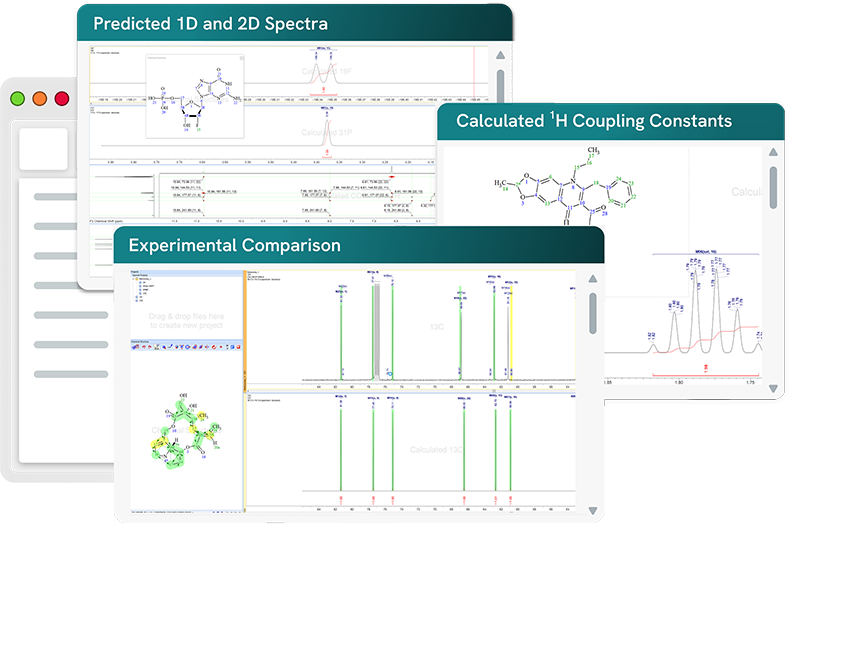
Predict 1D and 2D NMR data from chemical structure. Trusted by scientists across industries for more than 30 years, NMR Predictors accelerates analysis and enables confident spectral interpretation.

Trusted by Companies Worldwide























Explore
Predict 1D and 2D NMR Spectra with Confidence
From experimental design to data interpretation, NMR Predictors can significantly speed up your workflow.
Use NMR Predictors to:

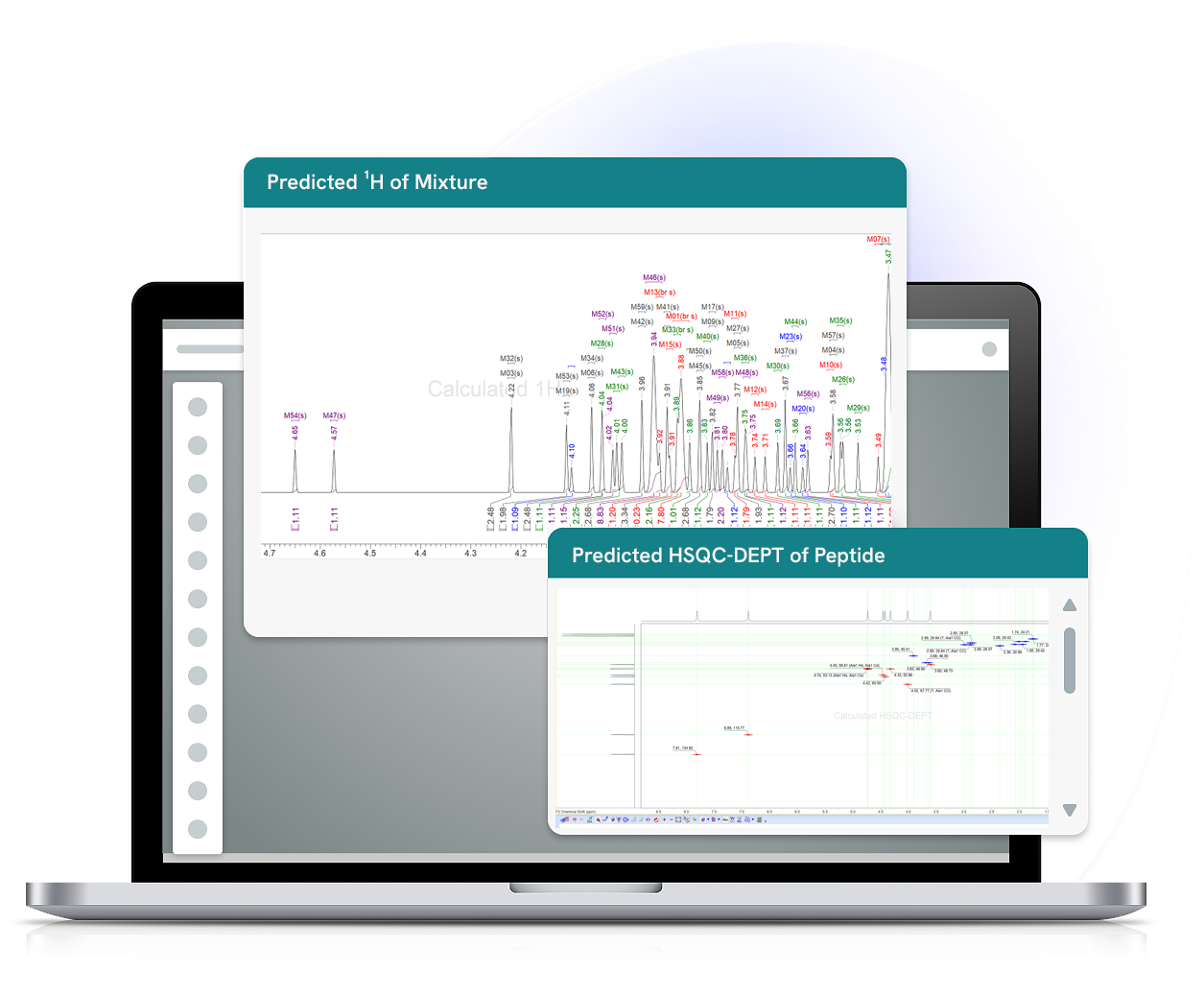
Predict a complete set of 1D and 2D NMR spectra, for 1H, 13C, 15N, 19F, and 31P nuclei from a chemical structure

Calculate chemical shifts and coupling constants in seconds

Train the algorithms with in-house data to improve accuracy for novel chemical space
Benefits
The Many Ways NMR Predictors Can Help You


Accurate, Reliable Results
- Accurately predict spectra of complex structures, peptides, polymers, and mixtures
- Take advantage of state-of-the-art prediction algorithms backed by extensive spectral databases


Faster Data Interpretation
- Quickly view flagged critical correlations on the structure and associated peak(s)
- Overlay the predicted and the experimental NMR spectra for quick decision making

Increased Accuracy with Database Training
- Train the prediction algorithm with experimental data to get the accuracy of an in-house database
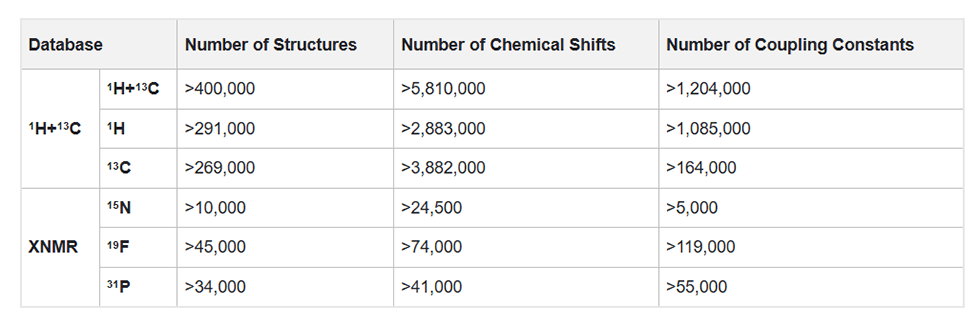
Take Advantage of Sophisticated NMR Prediction Algorithms
and Comprehensive Spectral Databases

NMR Predictors FAQs
NMR Predictors is a software application that predicts 1D and 2D NMR spectra from a chemical structure. Using advanced algorithms trained on extensive experimental databases, it helps scientists interpret spectra, verify structures, and accelerate NMR analysis workflows.
NMR Predictors can generate both 1D and 2D NMR spectra for 1H, 13C, and 15N nuclei, as well as 1D spectra for 19F and 31P. The software predicts complete spectra, including chemical shifts, coupling constants, and correlation data, to support spectral assignment and structural analysis.
NMR Predictors predicts 1H chemical shifts with 0.2 ppm mean absolute error (MAE) and 13C chemical shifts with 2 ppm MAE. For specialized applications, prediction models can also be trained using your organization's own experimental NMR data to further improve accuracy within specific chemical classes.
NMR Predictors includes incremental, hierarchical organization of spherical environment (HOSE) code, and neural network algorithms alongside extensive, continuously updated experimental databases to generate accurate spectral predictions. This combination of complementary methods helps deliver reliable predictions across a broad range of compound types.
Yes, NMR Predictors allows prediction models to be trained using your organization's own experimental NMR data, improving prediction accuracy for specialized or underrepresented chemical spaces. This enables organizations working with unique compound classes to generate predictions that better reflect their chemistry and analytical workflows.
NMR spectrum prediction is useful in a wide range of applications, including structure elucidation, structure verification, spectral assignment, and experiment planning. By predicting spectra before data acquisition or comparing predictions with experimental results, scientists can design more efficient NMR experiments, optimize instrument time, and interpret NMR data with greater confidence.
Yes, NMR Predictors allows users to visually compare predicted and experimental spectra within a single interface or automatically evaluate their agreement with single structure verification (SSV). As part of the Spectrus Platform, it also supports NMR data processing alongside data from other analytical techniques, enabling a more integrated analytical workflow.
NMR Predictors is available in both desktop and browser-based deployment options to support different organizational requirements. The desktop version can be installed on individual workstations, while the browser-based application can be deployed on a corporate intranet or in the cloud for broader access.
NMR Predictors can simulate spectra with instrument frequency up to 1.5 GHz and in more than 15 common solvents including acetone-d6, acetonitrile-d3, benzene-d6, chloroform-d, dichloromethane-d2, DMSO-d6, methanol-d4, and water-d2 (D2O).


Ready to take the next step?

Request a Quote
Connect with a solutions expert to discuss what you need and explore best pricing options for you.

Take a Tour
See how NMR Predictors can help you spend less time on your analysis and feel confident about your spectral interpretation.

Stay up to date
Stay up-to-date on all the latest insights, research and product news from Revvity Signals.