LogP and LogD
Partition and Distribution Coefficient Calculators
Predict logP and logD values directly from chemical structure.

Trusted By Companies Worldwide
















Explore
Understand Molecular Lipophilicity
LogP predicts partition coefficients, while logD predicts distribution coefficient, helping you evaluate molecular lipophilicity across different ionization states and pH conditions.

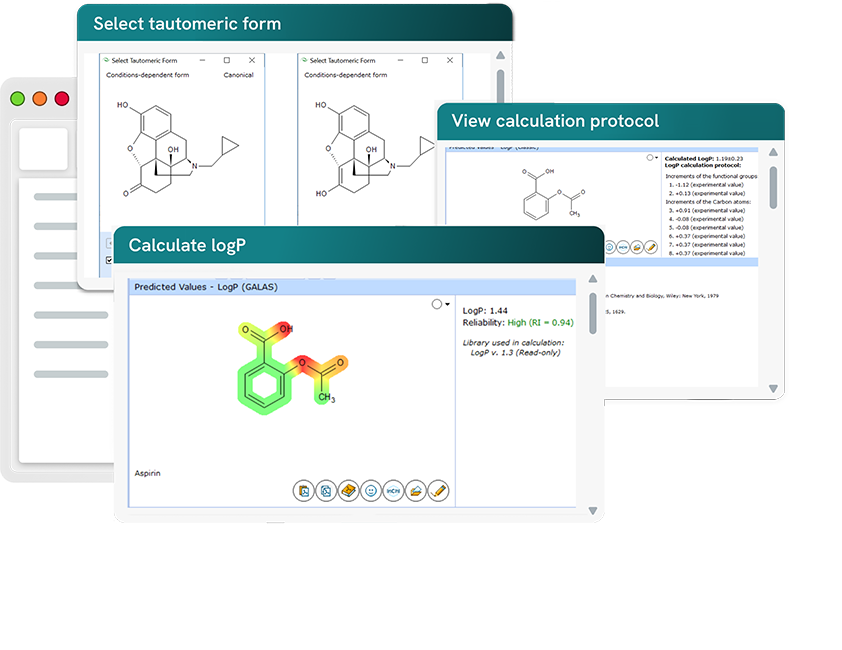
Calculate the partition coefficient (logP) for neutral molecules

Identify hydrophilic and hydrophobic fragments of a structure

Train prediction models using experimental measurements

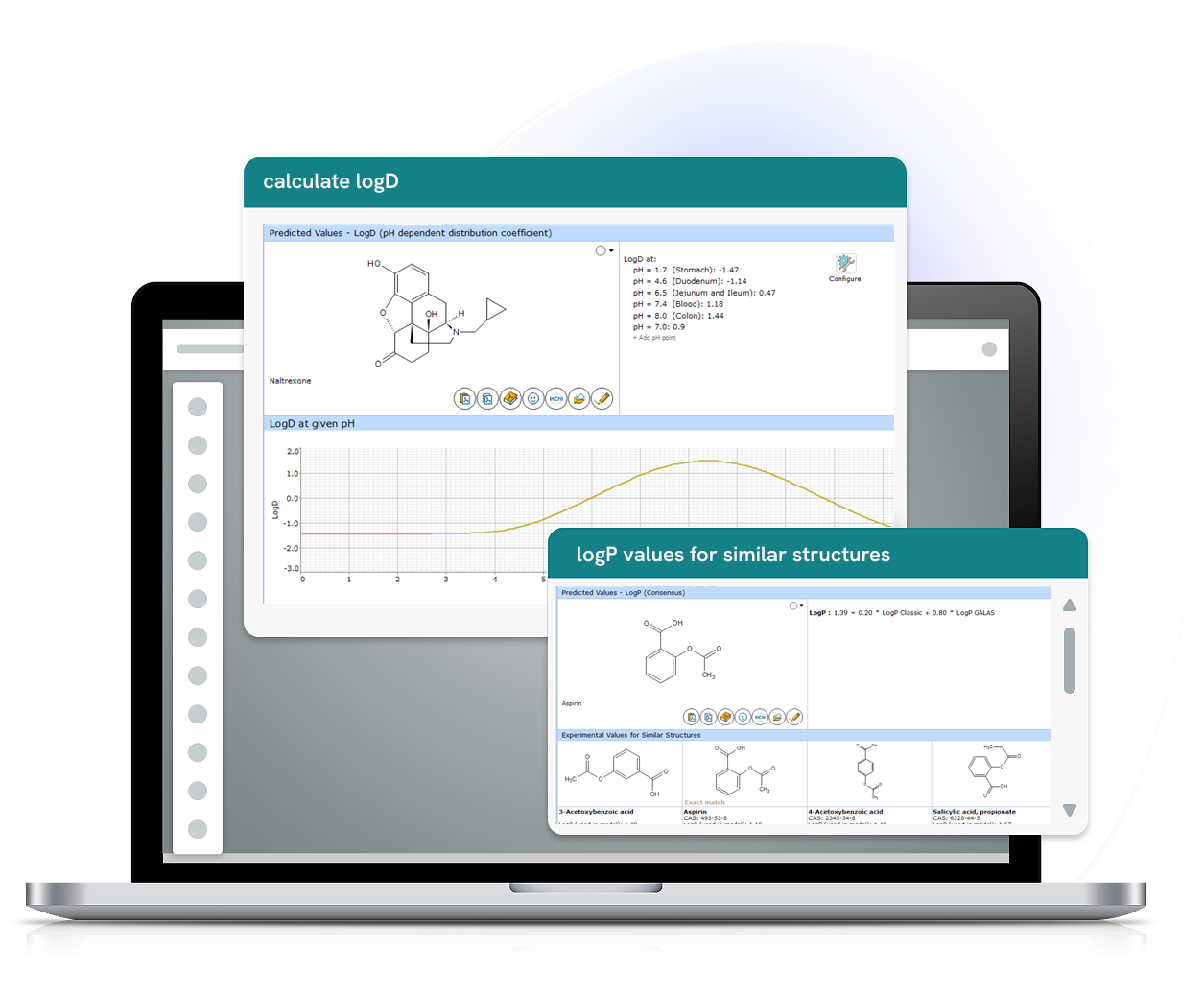
Calculate and visualize logD across a range of pH values, including physiologically relevant pH
Benefits
Everything You Need in a LogP Property Calculator


Accurate, Reliable Results
- Leverage an extensive training database of more than 22,000 compounds
- Evaluate prediction confidence using a reliability index, similar structures, and literature references
- Compare results from three complementary logP prediction algorithms: Classic, GALAS, and Consensus


Gain Deeper Insight into Lipophilicity
- Understand the behavior of your molecule with the automatically generated plot of logD versus pH
- Create scatter plots, browse, filter, sort, rank, and prioritize compounds with ease
- Identify hydrophilic and hydrophobic regions with colour mapping

Improve Predictions with Machine Learning
- Train prediction models using your own experimental logP data to expand the applicability domain to proprietary chemical space
- Build curated project-specific training sets for fine-tuned prediction accuracy

LogP and LogD FAQs


Ready to take the next step?

Beyond logP and logD Predictions
Explore the wider Percepta Platform for additional molecular property predictions.

Talk to our team
Schedule a consultation with our experts to discuss your workflow, requirements, and implementation needs

Stay up to date
Stay up-to-date on all the latest insights, research and product news from Revvity Signals.